- AI Paradox
- Posts
- Build an AI Research Engine That Actually Thinks
Build an AI Research Engine That Actually Thinks
A practical system for pulling real insights without the usual AI noise.

Raj C
November 25, 2025
Welcome back to AI Paradox.
Most people use AI to summarize. That’s why most people get shallow, generic outputs. If you want real leverage, you need a research engine — not a summarizer.
🔍 What’s Inside
The AI Research Engine
Build Your AI Research Engine
Tool’s You’ll Love
The High-Accuracy Research Engine Prompt
The Breakdown
The AI Research Engine

AI isn’t slow anymore. It’s inaccurate. And that’s a bigger problem.
Models hallucinate, over-confidently assert half-truths, and collapse under vague prompts. But here’s the flip side: with the right workflow, they become unbelievably sharp.
Why this matters:
You can tear through complex topics in minutes
You get insights instead of surface-level fluff
You stop relying on random Twitter “experts”
You build work that compounds instead of noise
The solution isn’t a better prompt.
It’s a structured engine.
The Workflow
Build Your AI Research Engine (3 Layers)
1) Extraction Layer — Get the raw inputs right
LLMs can’t invent accuracy. They can only transform what you feed them.
Your extraction layer should:
Pull expert sources, not SEO sludge
Compare contradicting viewpoints
Split inputs into chunks to avoid model smoothing
Force the model to retain citations
Prompt Starter:
“Pull me 5–8 expert-level perspectives on this topic. Keep contradictions. Keep citations. No smoothing, no unifying.”
2) Reasoning Layer — Make the model think before responding
This is where 80% of accuracy gets recovered.
Force the model to:
List every assumption
Note what’s missing
Identify weak evidence
Rate confidence levels
Propose counter-arguments
This removes the “pretend certainty” that ruins most AI outputs.
3) Synthesis Layer — Build the actual insight
Once the model thinks clearly, you shape the output into something usable:
Key takeaways
Risks
Opportunities
Models/frameworks
Strategic implications
What experts disagree on
This creates insight instead of noise.
THE ZERO-DRAFT LAYER
You now have research.
Instead of manually drafting anything, you push one button:
“Generate a Zero-Draft using the research stack above. Keep citations. Keep contradictions. Map all insights into a structured first draft.”
Results:
Full draft in minutes
No blank-page syndrome
No generic filler
Easy to refine with second-pass prompts
The Zero-Draft stage transforms research into usable writing instantly.
THE AUTOMATED OPS LAYER
Once the research engine works, you scale it with simple automation.
Where automation makes sense:
Daily/weekly research summaries
Topic monitoring
Competitor intel
Market movement digests
Tech trends
Regulatory tracking
Internal knowledge base updates
Slack/Notion reporting
This is where AI shifts from “tool” to “infrastructure.”
Shoppers are adding to cart for the holidays
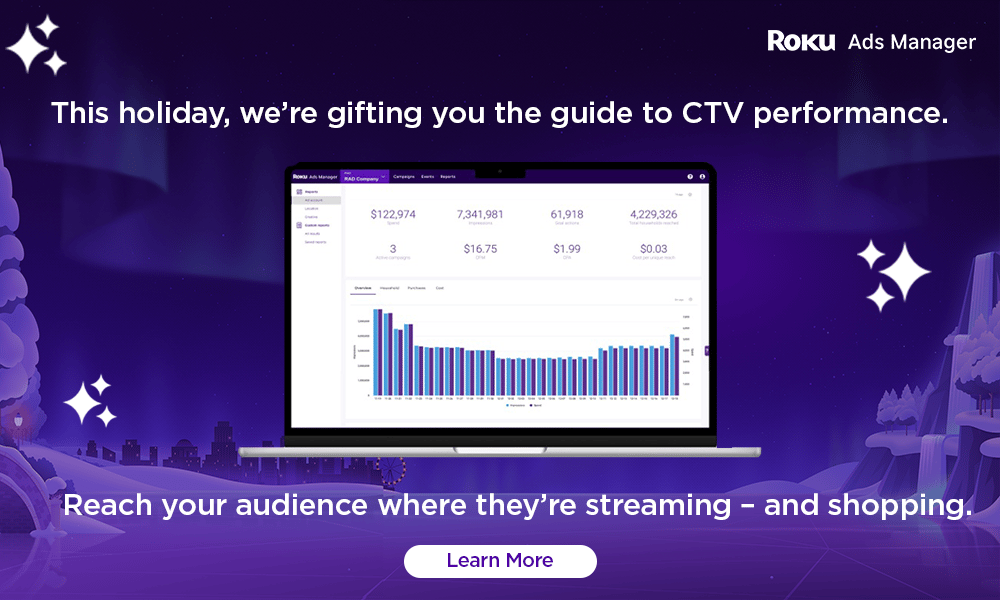
Peak streaming time continues after Black Friday on Roku, with the weekend after Thanksgiving and the weeks leading up to Christmas seeing record hours of viewing. Roku Ads Manager makes it simple to launch last-minute campaigns targeting viewers who are ready to shop during the holidays. Use first-party audience insights, segment by demographics, and advertise next to the premium ad-supported content your customers are streaming this holiday season.
Read the guide to get your CTV campaign live in time for the holiday rush.
Tools You’ll Love
Perplexity Pro — Best source extraction and multi-source synthesis.
Komo AI — Fast, low-noise research querying.
ChatGPT 5.1 (Thinking Mode) — Best for logic, synthesis, cross-checking.
Notion AI — Smooth for structured research hubs.
Research Rabbit — Academic and citation graph explorer.
Bardeen — Perfect for automated ops + research monitoring.
Relevance AI — Knowledge base + similarity search stack.
Prompt Play
The High-Accuracy Research Engine Prompt
Use this as your go-to framework:
“You are my Research Analyst.
Step 1 — Extract: pull expert perspectives, retain contradictions, and list exact citations.
Step 2 — Reason: list assumptions, missing data, weaknesses, confidence levels, counter-arguments.
Step 3 — Synthesize: produce insights, risks, opportunities, frameworks, and strategic implications.
Do NOT unify viewpoints. Do NOT smooth contradictions. Present everything transparently.”
This turns any model into a truth-seeking machine.
Quick Bytes
OpenAI improves fact-checking in GPT-5.1, reducing confidence errors by ~20%.
Perplexity adds “Deep References,” making hallucinated citations easier to catch.
Anthropic pushes more agentic workflows, but reliability still trails OpenAI for research use-cases.
Komo quietly becomes the preferred research engine for fast queries under 10s.
Most people chase more content. You’re building a research engine. That’s the difference between noise and leverage.
👉 Share AI Paradox — practical AI made useful.
-Team AI Paradox