- AI Paradox
- Posts
- Windows 11 is being rebuilt around AI
Windows 11 is being rebuilt around AI
Your Uber driver might be moonlighting as an AI trainer now and more...

Raj C
October 19, 2025
Hey folks, Stay ahead with the latest in AI—let’s dive in!
WHAT YOU’LL READ TODAY
Windows 11 is being rebuilt around AI
Your Uber driver might be moonlighting as an AI trainer now
Italian publishers push for probe into Google’s AI Overviews
Pinterest gives users control over AI content in feeds
And more…
QUICK NEWS
Italian publishers push for probe into Google’s AI Overviews
National newspaper federation claims the feature breaches media laws, calling it a “traffic killer” that threatens press diversity.
Pinterest gives users control over AI content in feeds
New tools let people limit generative AI images in certain categories, while clearer AI content labels will roll out soon.
Spotify deepens AI music push with major label partners
In collaboration with Sony, Universal, and Warner, the platform is launching an AI research lab and product team, though no specific tools were revealed.
LATEST UPDATE
Windows 11 is being rebuilt around AI: meet your talking PC
Microsoft’s next big move
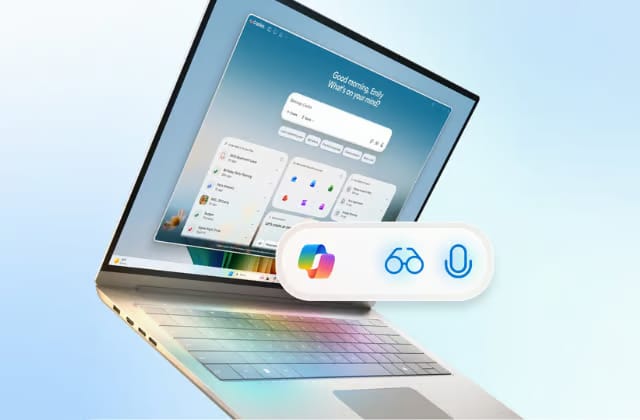
As Windows 10 approaches its end and Microsoft prepares to celebrate 40 years of its operating system, the company is reimagining Windows 11 as an “AI-first” platform. The goal? Every PC becomes an AI PC, powered by Copilot—one you can talk to, not just type and click on.
“We’re essentially rewriting Windows around AI, to build what becomes the true AI PC,” explains Yusuf Mehdi, Microsoft’s EVP and chief marketing officer for consumers.
Haven’t we heard this before?
Microsoft has promised big shifts before, but this time it’s not tied to special hardware. New AI features are coming to standard Windows 11 devices, no Copilot+ machine required.
The headline change: Microsoft wants you to talk to your PC and let Copilot handle tasks.
“You should be able to talk to your computer, have it understand you, and then see the magic happen,” says Mehdi.
Say hello with “Hey, Copilot”
Microsoft is introducing a new wake word—“Hey, Copilot”—to activate the assistant. Voice is positioned as the “third input method” alongside keyboard and mouse.
Of course, this isn’t new territory. A decade ago, Microsoft tried to push Cortana as a voice assistant for Windows 10, but it never took off. Now, the company is betting that modern AI will finally make voice interaction feel natural.
“All the data shows that when people use voice, they love it,” Mehdi claims, pointing to billions of minutes of Teams voice meetings.
What’s new in Windows AI?
Copilot Vision: An opt-in feature that can “see” your screen and help with apps, documents, or even photos. Unlike the failed Recall feature, it doesn’t automatically log activity—it streams only what you choose to share, similar to a Teams call.
Copilot Actions: Lets Copilot take real actions on your PC, such as editing a batch of photos. Still in preview, it’s limited to simple use cases for now. Microsoft admits it may stumble with complex apps at first.
These tools run inside a contained, secure desktop environment, where you can watch every step Copilot takes—while you continue using your PC.
Where you’ll find it
Copilot is being baked directly into the Windows taskbar for one-click access, with integrated voice, vision, and search.
The trust problem
After last year’s Recall privacy backlash, convincing users to let AI “see” their screen or perform actions on their behalf won’t be easy. And getting people comfortable with talking to their computers may be an even bigger hurdle.
Still, Microsoft is pushing ahead, complete with TV ads promising: “Meet the computer you can talk to.”
The bigger bet
Mehdi sums up the company’s vision: “We want every Windows 10 upgrader to feel their PC isn’t just a tool—it’s a partner.”
Whether people are ready to embrace that—and actually chat with their laptops—remains Microsoft’s billion-dollar gamble.
Your Uber driver might be moonlighting as an AI trainer now
What’s new?
Uber just kicked off a U.S. pilot program that lets drivers and couriers pick up extra cash by completing small “microtasks” to train AI systems.
The jobs range from recording voice samples, snapping and uploading images, to submitting documents in different languages.
Examples include: uploading photos of cars, reading phrases aloud in your dialect, or submitting a restaurant menu in Spanish. That last one? It could net you a whole dollar.
So Uber’s getting into AI training?
Yep. With this move, Uber is putting its vast network of gig workers in direct competition with firms like Scale AI and Amazon Mechanical Turk, which already supply generative AI companies with the human labor needed to tag and label training data.
Traditionally, that work has been outsourced to low-wage labor markets abroad. Uber’s pitch: why not tap the drivers already signed into its app?
Is this really new for Uber?
Not entirely. The company has quietly used contractors for “human-in-the-loop” AI training before. It also bought Belgian startup Segments.ai to boost its data-labeling chops. In fact, drivers in India were already offered similar side hustles—now it’s rolling out stateside.
But will drivers bite?
That’s an open question. Many already complain that Uber’s cut of fares leaves them struggling to earn a decent wage.
And while Uber insists its drivers are “independent contractors” free to choose their work, critics argue the company’s algorithmic control makes them look a lot more like employees—without the benefits.
What else did Uber announce?
The AI side gig was part of a bigger package unveiled in Washington, D.C., where CEO Dara Khosrowshahi promised to build “the best platform for flexible work.” Highlights include:
Trip offer redesign: Drivers now get more time and more details before accepting a ride.
Heatmap upgrade: Clearer demand zones, with color codes for wait times and surge pricing.
Women Rider Preferences expansion: Now available in more U.S. cities, allowing women drivers to match only with women riders (already used on 100M+ trips).
Minimum rider ratings: Drivers can set their own cutoff for rider quality.
Fairness updates: Drivers get a chance to respond to complaints before action is taken; repeat false reports from riders could lead to deactivation.
Delayed Ride Guarantee: Extra pay for trips slowed by customer delays or traffic snags.
More tipping nudges: Expanded to iPhone Live Activities to remind riders to tip.
The takeaway:
Uber is pitching itself as the one-stop shop for flexible work—whether that means driving across town or uploading menus for pocket change. Whether drivers see this as an opportunity or just another hustle is still up for debate.
POPULAR TOOLS
Kaedim — AI tool that converts 2D images into high-quality 3D models.
Zarla — AI website builder for creating professional sites in seconds.
Papertalk — AI platform that makes research papers easier to understand.
Abacus.AI — Data science platform for building and deploying applied AI at scale.
That’s all for now — thanks for spending a few minutes with us today. We hope you found something valuable to carry into your week. Got thoughts, feedback, or just want to say hi? We’d love to hear from you. Until next time, stay curious and keep moving forward.
-Team AI Paradox